If you run a business that depends on local customers, you’ve probably noticed that the way people find you has been shifting. Maybe your Google Business Profile calls are down even though your rankings haven’t moved. Maybe you’re seeing AI generated answers pop up where the map pack used to be. Maybe you’re just getting the feeling that what worked a couple of years ago isn’t working quite as well anymore.
You’re not imagining it. Local search has changed a lot in the past year or so. Some of those changes are small. Others are pretty big. But here’s what gets lost in all the noise: the basics of what makes local SEO work haven’t really changed. What’s changed is everything around it, and that means the bar for what “good” looks like is a lot higher now.
So rather than giving you another list of 10 generic local SEO tips (there are plenty of those already), let’s talk about what’s actually different now, what it means for you, and where you should be putting your effort.
Your Google Business Profile Is Doing More Heavy Lifting Than Ever
This probably won’t surprise anyone who works in this space, but Google Business Profile matters even more now than it did before. The 2026 Whitespark Local Search Ranking Factors study, which surveyed 47 leading local SEO experts across 187 ranking factors, confirmed what most of us already knew: GBP is still the biggest thing driving local pack rankings. A bunch of new ranking factors made the list this year, and nearly all of them are GBP related.
But what’s interesting is how it matters now. Filling in your profile once and leaving it alone doesn’t cut it anymore. Google wants to see that your profile is active: fresh photos, regular posts, replies to reviews, updated services, accurate hours. If your profile looks like nobody’s touched it in months, that’s going to hurt your visibility.
There’s also a surprising finding from the Whitespark study: your visibility can drop when your business shows as closed or “closing soon.” So if you’re a shop or a clinic, your opening hours are directly affecting when you appear in results. If your competitor down the road opens an hour earlier, they could be picking up searches you’re missing out on.
The Local Pack Is Getting More Crowded
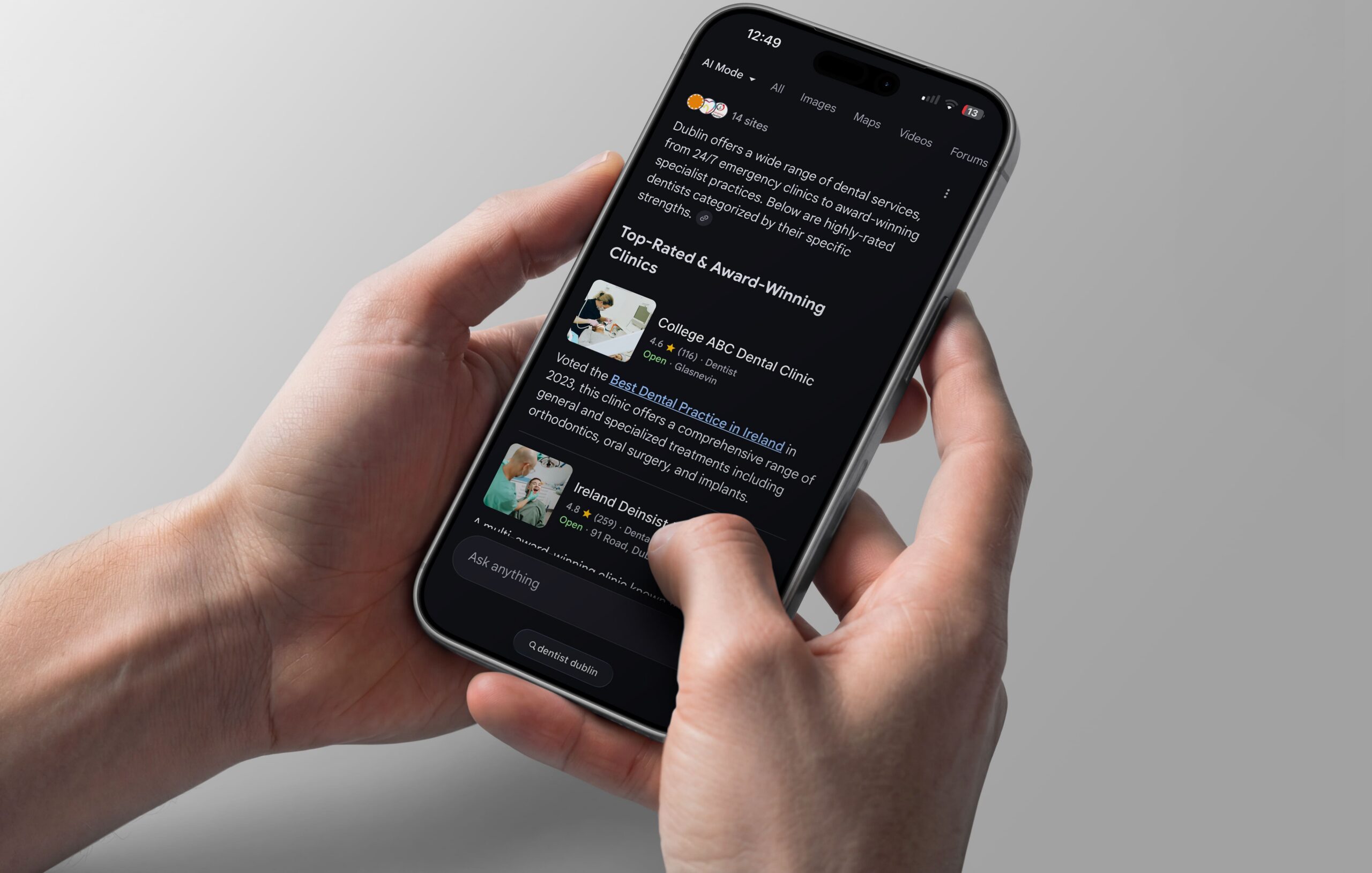
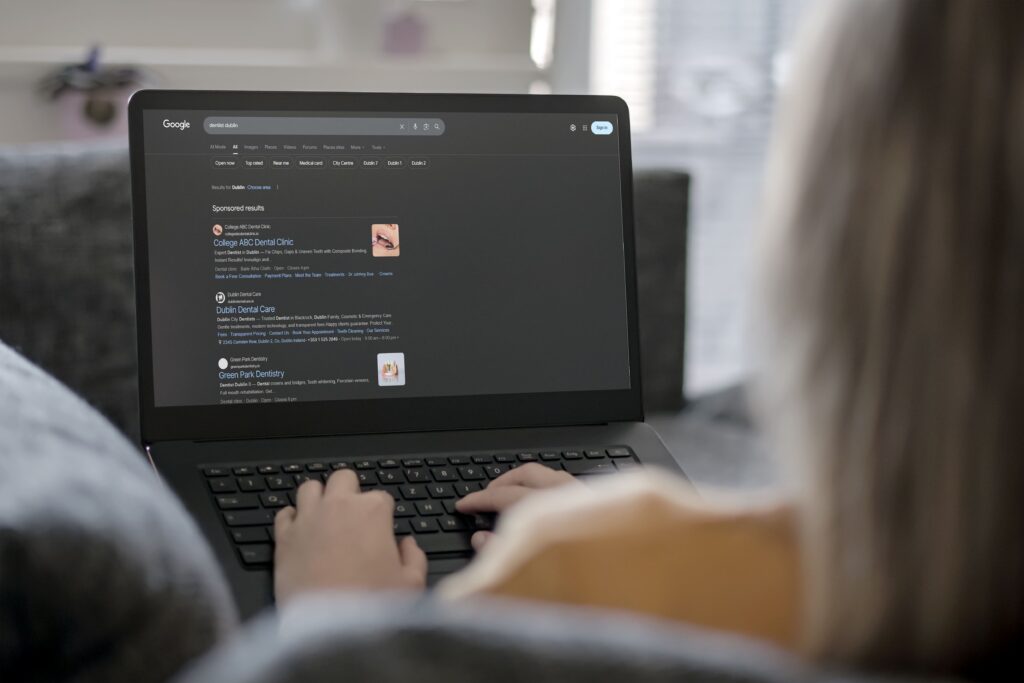
So GBP is more important, that’s clear. But the space around it is changing fast. If you’ve been watching how Google’s search results look on mobile lately, you’ve probably noticed things getting busier. The local 3-pack is still there, but there’s more stuff around it now. More ads above it. More SERP features competing for attention. More AI generated content pushing organic results further down the page.
What this means in practice is that even if your rankings haven’t changed, you might be getting less out of them than you used to. Your listing is in the same spot, but there’s simply more happening on the screen before someone gets to it. And Google keeps testing new layouts and formats, so what you see today might look different again in six months.
This is why relying on the local pack alone isn’t a great plan anymore. It’s still important, absolutely. But the businesses that are doing well are the ones that aren’t putting all their eggs in one basket. They’ve got a strong website that converts visitors when they land on it. They’ve got reviews across multiple platforms, not just Google. They’ve got content that shows up in different types of search results. Their whole online presence is working together, so if one thing shifts, the others pick up the slack.
Think of it this way: the local pack is one door into your business. A really important door. But in 2026, you want to make sure there are several doors open, not just one.
Reviews Have Changed. It’s Not Just About Star Ratings Anymore.
Everyone knows reviews matter for local SEO. That’s not new. What is new is how they’re being evaluated.
Google and AI tools aren’t just counting your stars or how many reviews you’ve got. They’re actually reading what people write. If a customer mentions a specific service in their review, that helps Google connect your business to that service. When reviews talk about your team, your location, or specific results, it backs up your credibility in that area. What people actually say about you matters a lot more now.
Another thing that’s changed: it’s not just Google reviews that count anymore. Trustpilot, Yelp, TripAdvisor, Facebook, industry directories, they all feed into how trustworthy your business looks to search engines and AI. SE Ranking research found that businesses with profiles on review platforms like Trustpilot and G2 have three times higher chances of being cited by ChatGPT compared to businesses without that presence.
And Google’s spam detection for fake reviews has gotten really aggressive. Buying reviews or running incentivised campaigns is riskier than ever. The businesses doing well with reviews right now are the ones earning them naturally over time, and actually taking the time to reply.
Citations Still Matter, But Not the Way They Used To
There was a time when local SEO meant submitting your business to every directory under the sun. The more listings the better, right? That approach doesn’t work anymore.
Citations still play a role. Having your business name, address, and phone number (NAP) the same everywhere online is still a trust signal. But the focus has moved from having loads of listings to having the right ones. A few accurate, relevant listings on well known directories and industry sites does more for you than 300 random ones that nobody checks.
Worth knowing: AI tools now use your citations to check whether your business info is correct. If your details don’t match up across the web, AI is less likely to recommend you. Even small things like a different phone number format or a slightly different business name can cause problems. Keeping your data clean and consistent across your main listings is a small job that makes a real difference.
Content Has Shifted: Generic Location Pages Don’t Cut It Anymore
This is a big one, and we’ve seen it first hand with our own clients. For years, a go to local SEO move was creating pages for “[service] in [city]” for every area you covered. And it worked well enough for a while.
In 2026, that doesn’t fly. Google has gotten much better at spotting thin, copy paste content. If you can swap out the city name on a page and everything else stays the same, that page probably isn’t going to rank. If the only difference between your Dublin page and your Galway page is the location name, both pages need more depth.
What works now is content that actually feels local. Content that mentions local landmarks, talks about specific needs in that area, uses real photos from the location, and gives people information they can actually use. It’s more work, sure. But it’s the kind of content that users, search engines, and AI tools all respond to.
Sterling Sky’s data backs this up. They’ve completely changed their content approach to focus on writing things that competitors haven’t covered, instead of just copying what’s already ranking. Original, locally relevant stuff with real expertise behind it is what gives you an edge now.
Link Building for Local: Quality Over Quantity (Finally)
Local link building has grown up. Mass directory submissions and link swaps don’t do much anymore. What does help is getting links from local, relevant, trustworthy sources.
Think about what shows that your business is a real part of the local community. Sponsoring a local event. Getting featured in a local newspaper or online publication. Being listed with your local business association or chamber of commerce. Writing a guest piece for a relevant industry site. These kinds of links show search engines and AI that your business is real, active, and trusted where it operates.
One good link from a trusted local organisation is worth more than dozens of random directory listings. Even unlinked mentions of your brand (someone writing about you without linking to your site) feed into the trust signals AI uses to judge credibility. Being talked about matters, link or no link.
The Technical Stuff Still Breaks Everything If You Ignore It
Nobody finds this stuff exciting, but technical SEO is still what holds everything together. For local businesses, there are a few things worth paying attention to.
Schema markup is a big one. LocalBusiness schema, Service schema, FAQ schema, Review schema, this structured data tells search engines and AI exactly what your business does, where you are, and what you offer. Without it, you’re hoping these systems work it out themselves. And they don’t always bother.
Mobile is another one. Most local searches happen on phones, and Google judges your site based on the mobile version first. If it’s slow, awkward, or hard to use on a phone, you’re losing people before they even see what you have to say.
And page speed matters more than ever. SE Ranking data shows that faster loading pages get significantly more citations in AI generated responses. So your technical setup is about whether AI platforms consider your site worth referencing at all.
What Google’s AI Mode Means for Local Businesses
Right, let’s get to the AI part. Google’s AI Mode is already live as a separate tab in search, and there’s a good chance it becomes the default search experience sometime this year. Google’s lead product manager for AI products basically said as much on X, and with over 100 million people already using AI Mode every month, it’s pretty clear where things are heading.
So what does that mean if you run a local business? Honestly, it’s more nuanced than most headlines make it sound.
For informational stuff (“how to choose a plumber” or “what does a solicitor charge”), AI Mode gives people answers right there, so fewer clicks. That’s real. But for the searches that actually bring in business, the ready to buy ones? It’s a very different story. A UX study published by Search Engine Land found that 69% of transactional searches in AI Mode still led to a website click. Only 27% of people felt ready to decide based on the AI answer alone. People use AI Mode to narrow down their options, not to pick a winner.
And here’s the really interesting bit for local businesses. In normal search, the number one result gets most of the clicks. In AI Mode, 89% of people clicked on more than one business, looking at about 3.7 results on average. You don’t need to be number one. You just need to be one of the three to five businesses that AI puts in front of someone.
How do you get into that group? The same things we’ve been talking about in this whole article. A strong Google Business Profile. Good reviews on different platforms. Clear, well organised content. Consistent business info across the web. Schema markup that helps AI understand what you do and where. Trust signals that show your business is legit.
If AI Mode does become the default, the businesses with solid local SEO will be the ones that AI recommends. The rest just won’t be part of the conversation. Simple as that.
What Hasn’t Changed (And Why That’s Actually Reassuring)
With all this talk about what’s different, it’s worth saying: a lot hasn’t changed. And that’s actually good news.
Proximity still matters. If someone searches for something near them, Google still cares a lot about how close your business is. Relevance still matters. If your business clearly matches what someone’s looking for, you’ll show up ahead of one that sort of does. And prominence still matters. The more reviewed, mentioned, and linked your business is online, the more visible it’ll be.
These three things have been at the heart of Google’s local algorithm for years, and they’re not going anywhere. What’s different is how they’re measured, and how many places (traditional search, AI Overviews, AI Mode, voice, chatbots) now look at the same signals.
The businesses that keep showing up are the ones that treat local SEO as something you keep working on, not something you set up once and walk away from. Updating your content. Staying on top of reviews. Keeping your business info consistent. Making sure your website runs well. Nothing fancy. Just solid, steady work that adds up over time.
So Where Does All of This Leave You?
If you’re a local business owner reading this, here’s the honest truth: local SEO in 2026 takes more work than it used to. The bar is higher. There’s more competition. And the ways people find businesses keep multiplying.
But the upside is real. Get your local SEO right and you’re building something that works for you everywhere, from Google’s normal results to AI Mode to ChatGPT to voice search. A solid foundation makes you visible wherever your customers are looking. And as more searching moves to AI, that foundation is what decides whether you get recommended or skipped over.
The businesses that act on this now will be the ones that stay ahead. The ones that keep doing what they’ve always done will keep losing ground to the ones that didn’t.
Need Help With Your Local SEO?
At SWOT Digital, we work with local businesses across Ireland and the UK to build local SEO strategies that get real results. Google Business Profile, technical audits, content, link building, AI visibility, we do all of it.
If you’re not sure where your local SEO stands or what to focus on, talk to our team about a local SEO audit. We’ll show you where you stand, what needs fixing, and what it would take to get ahead of your competition. No jargon, no hard sell. Just a clear picture and a plan.